
The Row Deconstructed Stacking and the Aesthetics of Non-Functional Space,My Heavyweight Silk Georgette Dress


Deconstruction fashion emerged in the 1980s, when designers in France and Belgium began questioning the conventions of what a garment “should” look like, reimagining clothing from the ground up. Deconstructivist pieces are often asymmetrical, impractical, or deliberately indeterminate — some exist purely as wearable art.
The hallmarks of deconstructivist construction include: linings and seams turned outward to the surface; raw edges and unsealed hems left intentionally unfinished; front and back reversed or inverted; sleeves and necklines cut to exaggerated lengths.
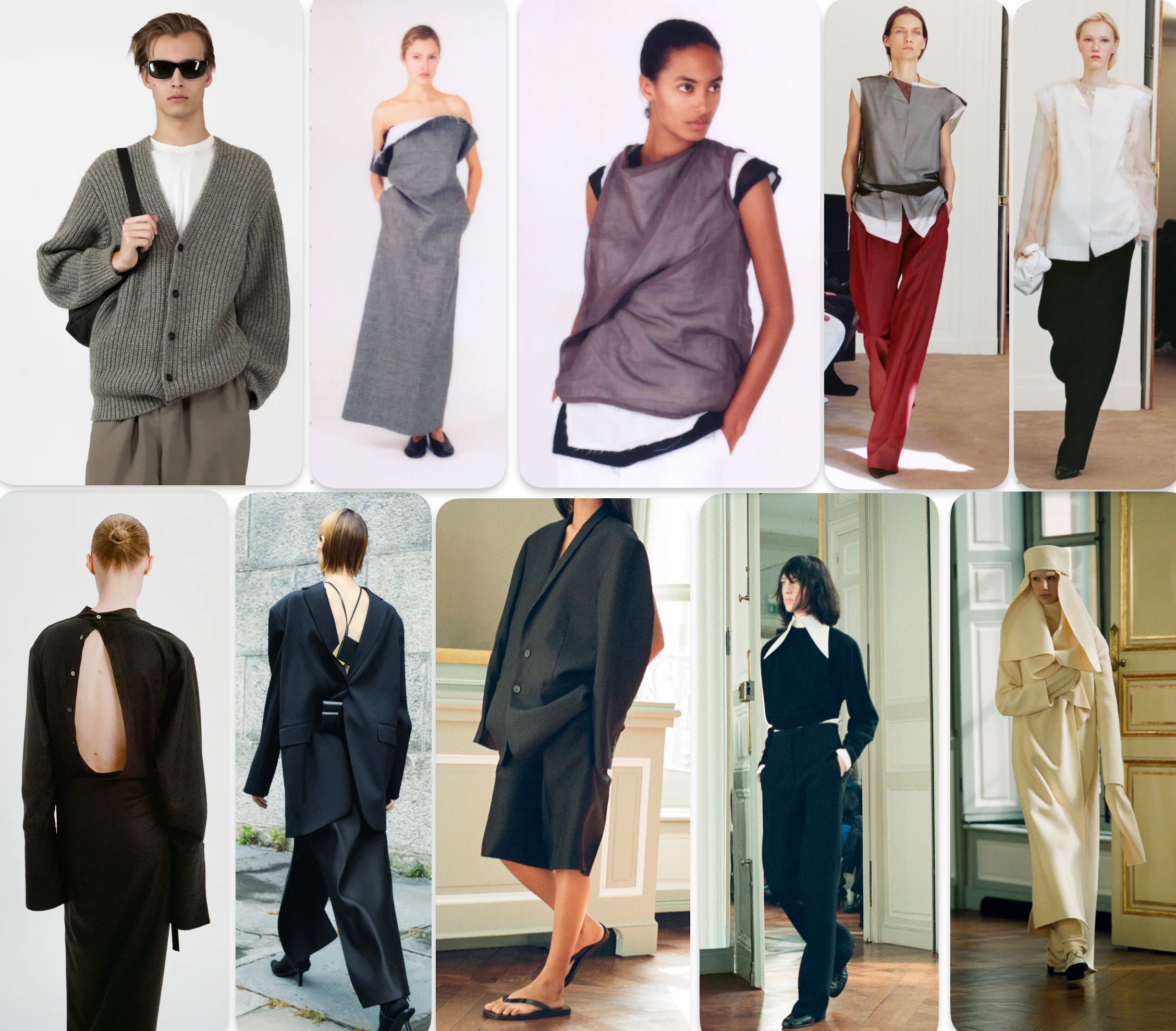
Individual sections of a garment may be removed and reassembled in unexpected configurations, with openings cut in unconventional places. Helmut Lang is perhaps most associated with this technique. The three looks in the top-right of the image above — from The Row’s 2025 Summer and 2026 Winter collections, featuring sheer layered fabric over sleeveless vests — share a clear affinity with Helmut Lang’s signature aesthetic.
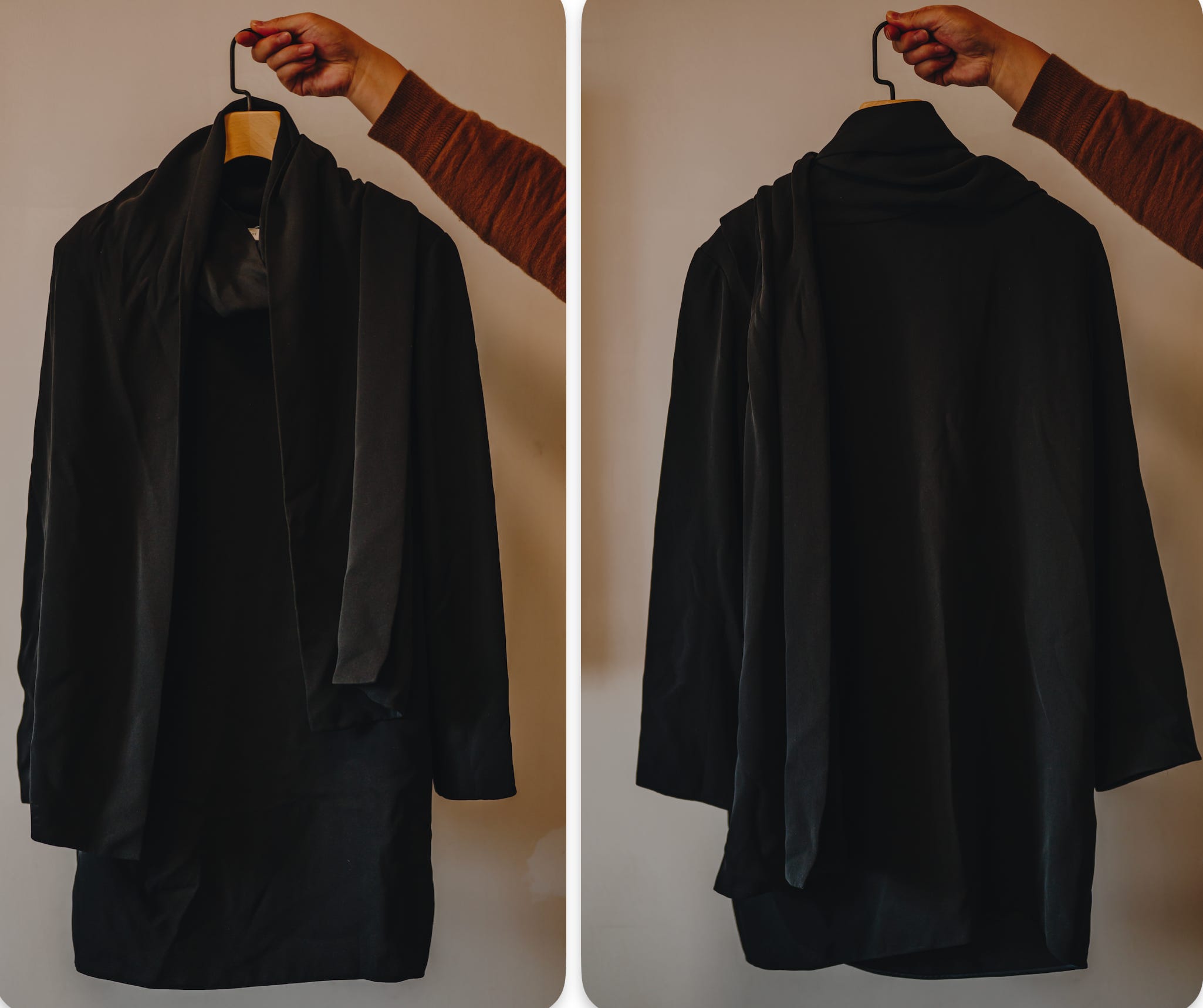
Since I own a Row dress with an attached, non-detachable two-metre mulberry silk scarf, this overview of The Row’s deconstructivist work focuses specifically on one subcategory: garments that incorporate a sense of layering and “surplus” fabric to create spatial depth and visual volume.

Deconstruction, by nature, sits at the avant-garde end of fashion. Even at The Row, it remains largely confined to womenswear — the menswear continues to favour practical, everyday silhouettes. Within womenswear, the approach appears more frequently in lighter spring and summer collections: warmer weather reduces reliance on insulation, allowing construction to prioritise form over function. Autumn/winter deconstructivist pieces are less common for several reasons — colder conditions demand warmth, exaggerated deconstruction becomes impractical; wool and cashmere fabrics carry higher material costs; and thicker cloths impose greater demands on pattern-cutting and finishing.

01
The first type: an additional scarf or open cardigan wrapped at the waist. This approach appeared in early form at Hermès in the 1990s. It applies equally to lightweight everyday tops, overcoats, and dresses.
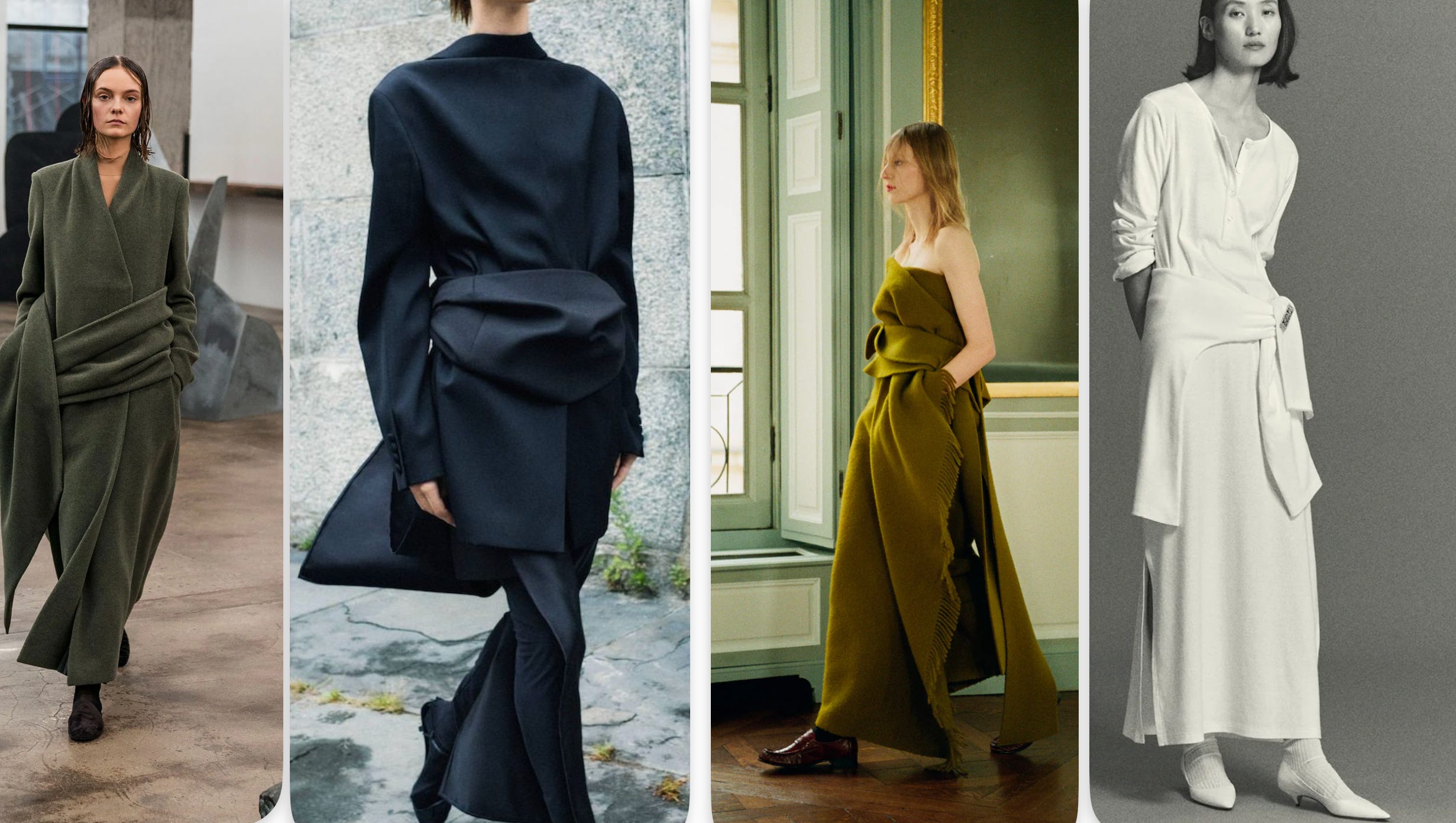
The 2026 Summer and 2026 Winter versions of this waist-wrap treatment carry considerably more weight and substance.
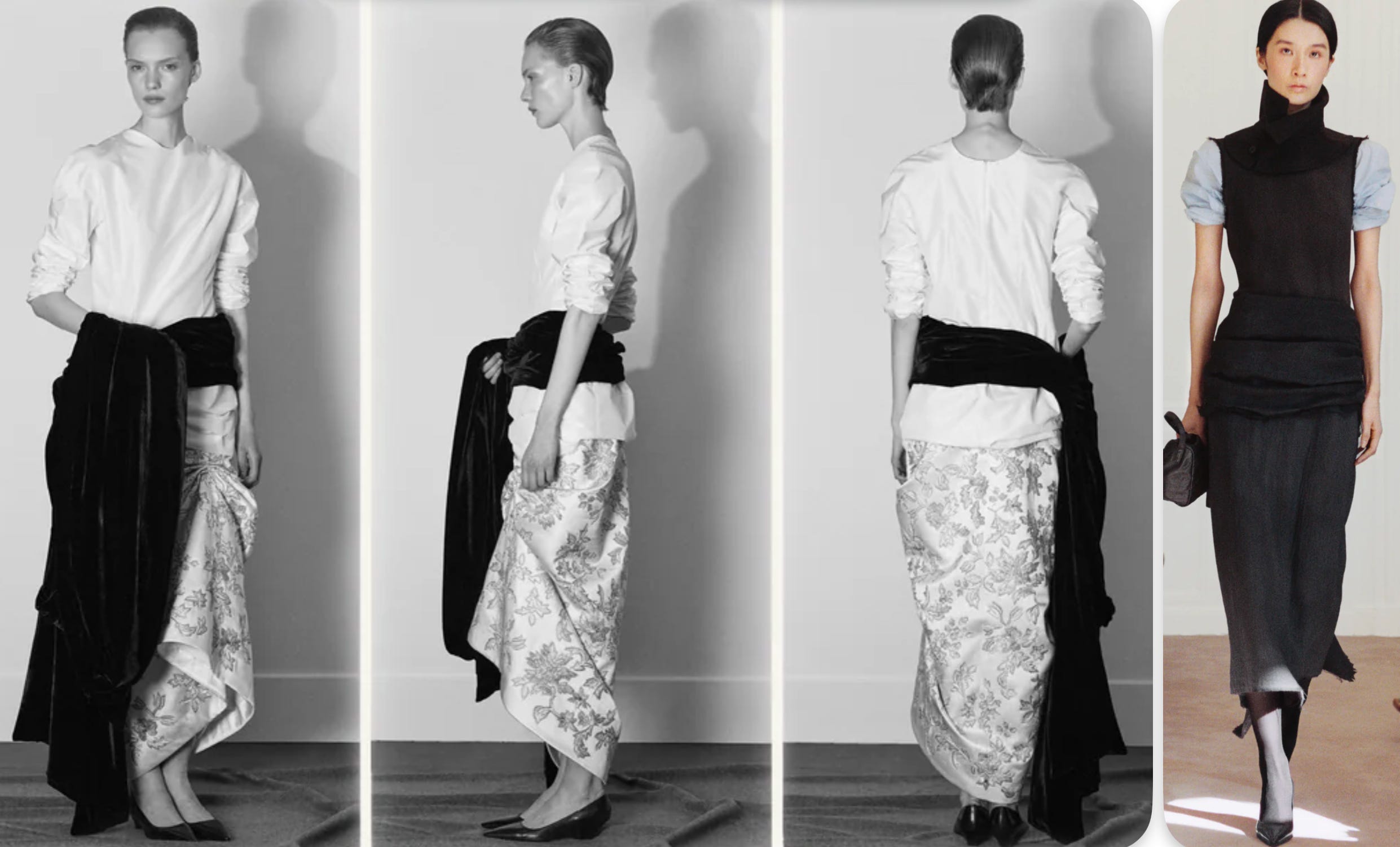
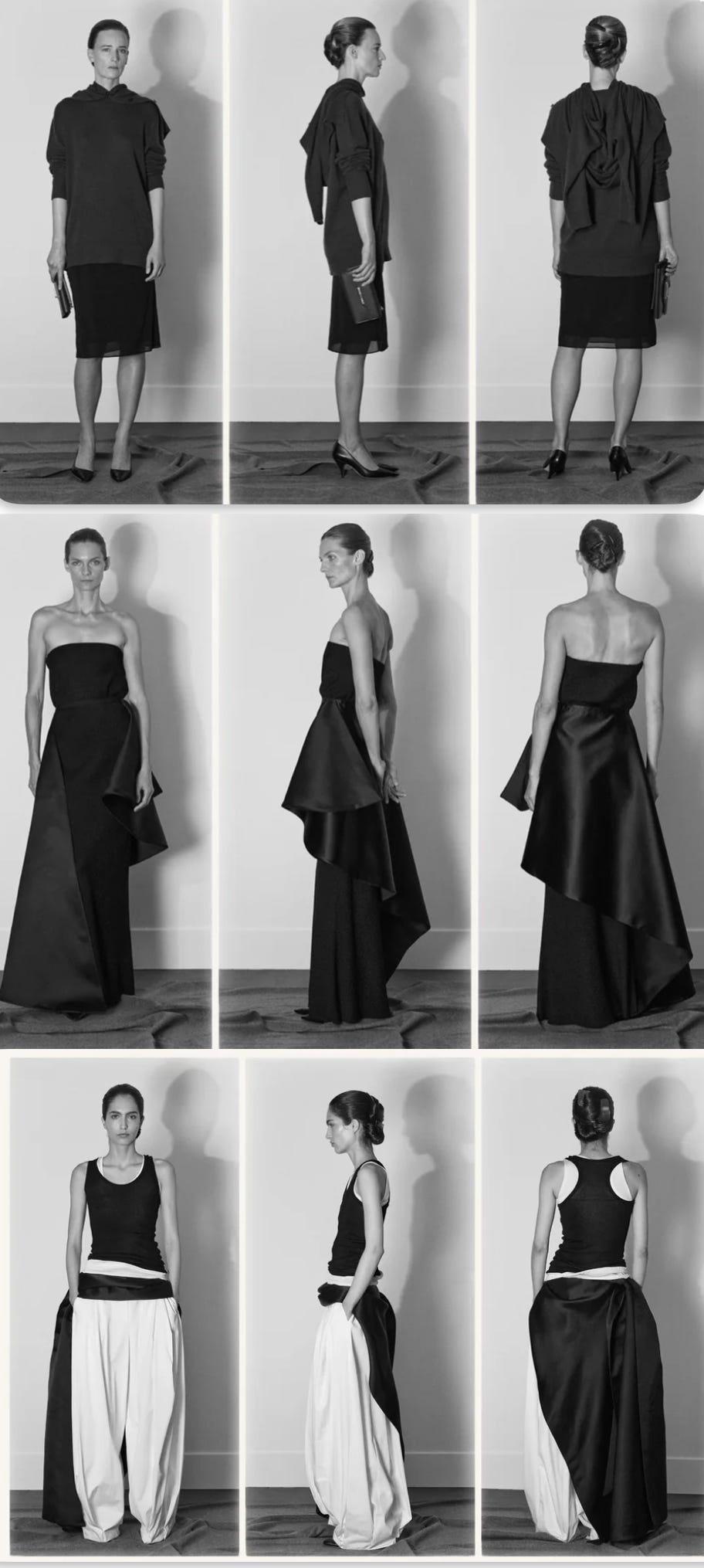
The second type: additional fabric added at the back or sides to enhance drape and airiness.
Several looks from the 2026 Summer collection employ this back-and-side fabric addition. The lookbook photography for this season includes front, profile, and rear angles throughout.
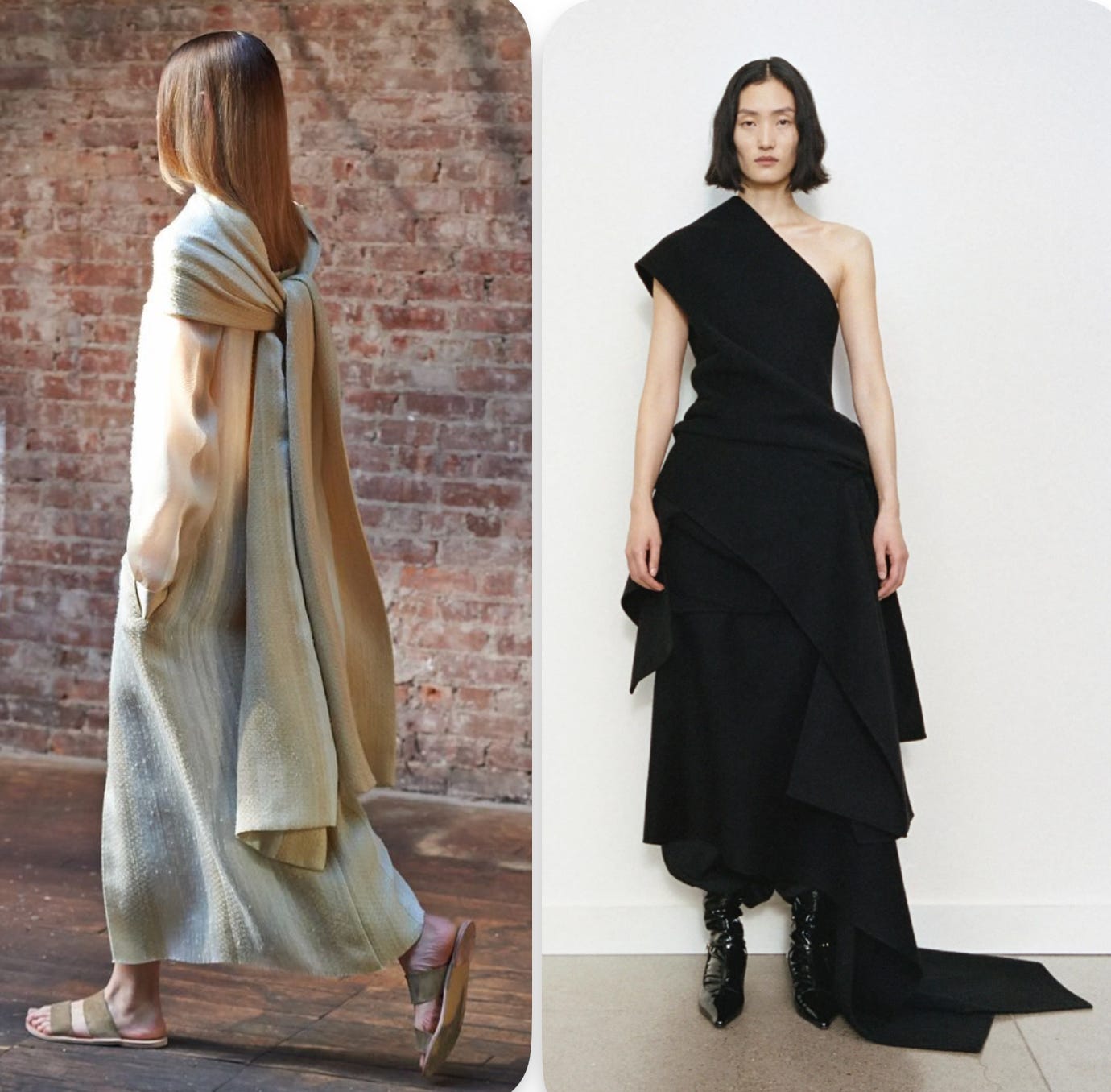
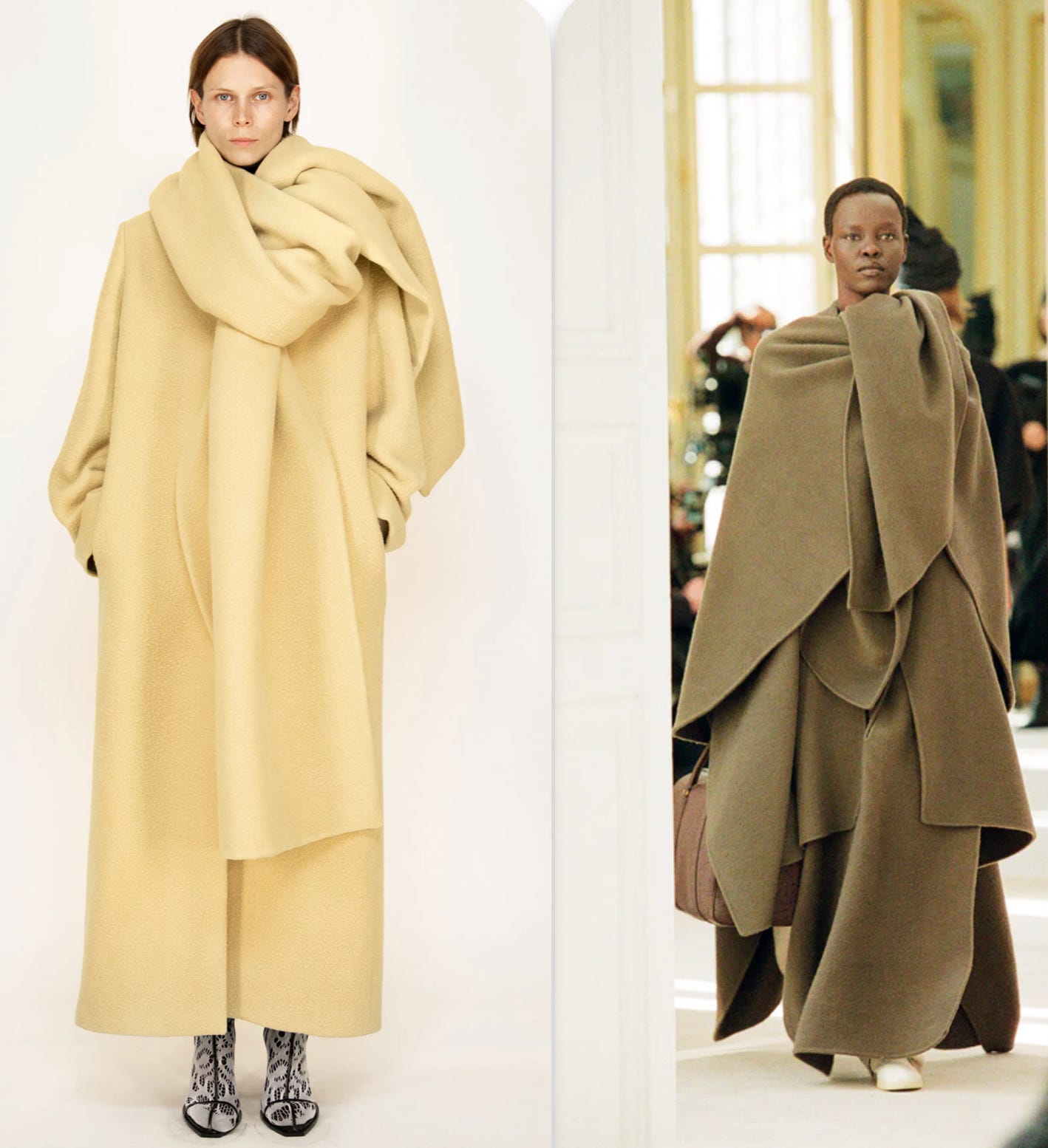
The third type: additional layering at the shoulder, introduced through capes, open cardigans, scarves, or surplus sleeve lengths.
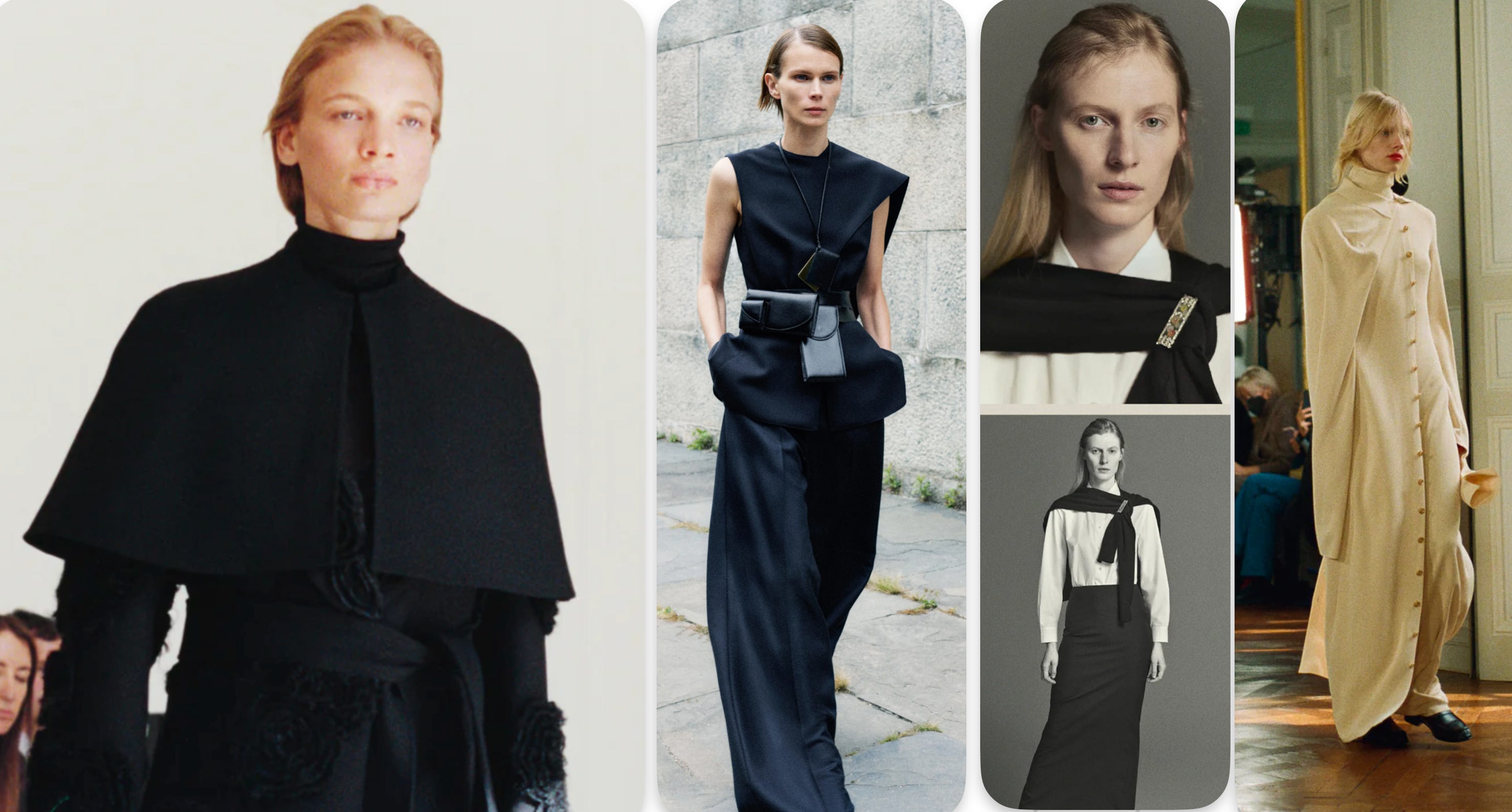
A single layer of lightweight fabric works best at the shoulder: it draws the visual centre of gravity upward, adds dimension, and does so without overwhelming the rest of the silhouette.
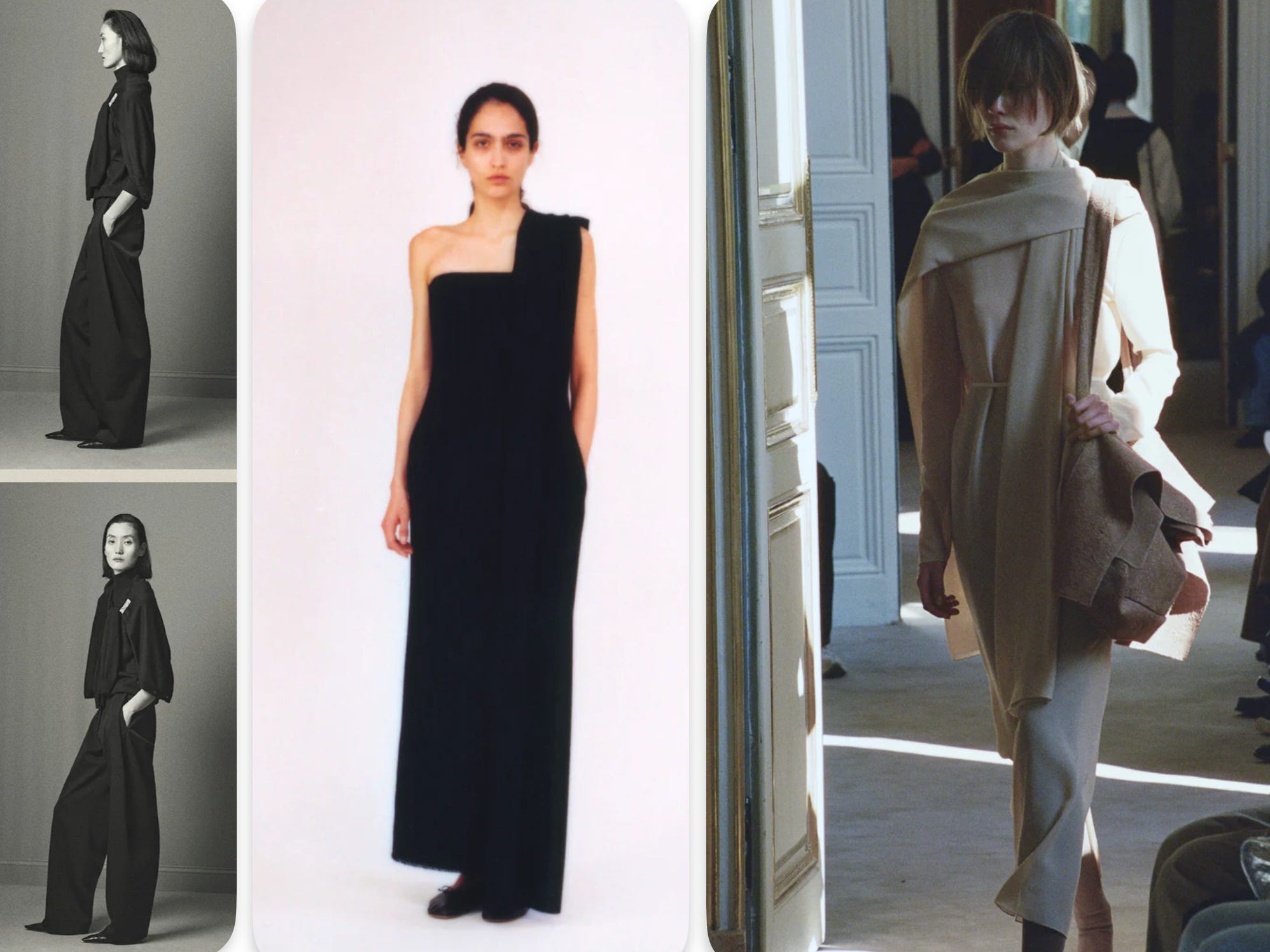
The scarf and dress I own are both made from a densely woven, heavier-weight georgette mulberry silk. I have written a brief analysis of this fabric in the Crêpe Textiles piece and won’t repeat it here. In most deconstructivist garments, the additional elements are sewn in place and cannot be removed. Once they become detachable, the garment crosses from structural design into the territory of styling.
As one moves, these lightweight shoulder layers produce a distinct oscillation — a sense of fluidity and unstudied elegance that is difficult to achieve through any other means.

With heavier autumn/winter fabrics — cashmere overcoat-weight cloths, for example — surplus shoulder construction tends to read as excess. Taken too far, the head appears as an afterthought above a mass of fabric, and the result is neither as wearable nor as refined as the lighter-season versions.
Beyond these three approaches, The Row also applies volume to skirts in a more direct way — borrowing from the tradition of French Rococo court dress and simply piling on fabric to construct an expansive silhouette.
This approach is genuinely heavy. I once lifted a 100% cotton full-skirted dress with this kind of voluminous hem from a rail in-store, felt the weight immediately, and put it back. The thought of wearing it for any length of time was discouraging enough.
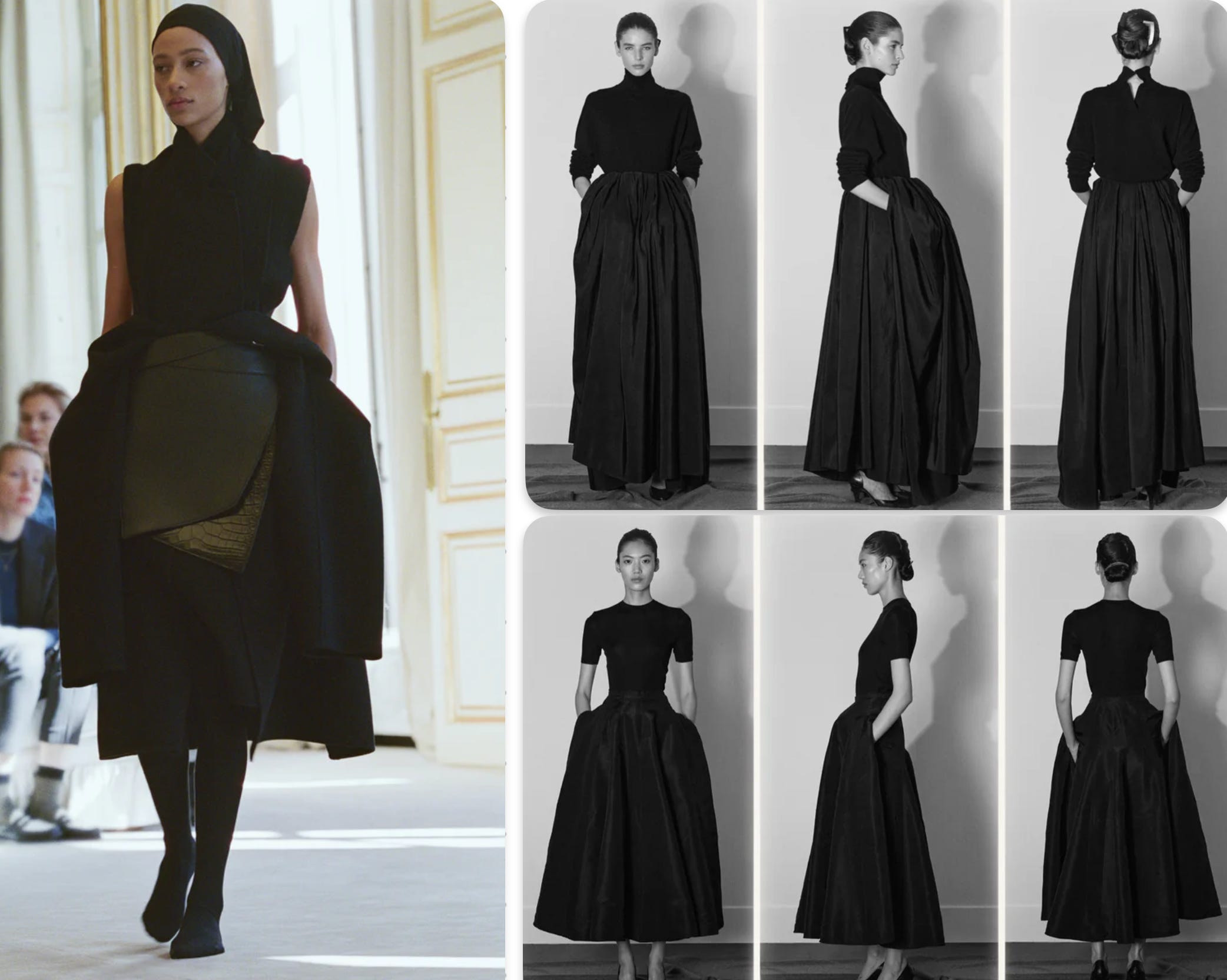
When deconstruction is pushed to its furthest extreme, it becomes wearable sculpture — appropriate for exhibition, film, or theatre, but incompatible with the practical demands of contemporary life.
Epilogue
Dresses allow considerable scope for design imagination, and they require a substantial amount of fabric. Like tailored suits and overcoats, they rank among the highest-priced and most investment-worthy categories in a wardrobe. The more sculptural, fabric-intensive deconstructivist dresses from The Row mentioned above can reach around ¥100,000 RMB. Most of the brand’s wearable summer dresses are priced in the region of ¥30,000 RMB.

That price corresponds to: top-tier fabric with excellent lustre and hand; precise seam work and construction details; silhouettes and proportions that are properly resolved, with fabric used generously where the design calls for it; pattern-cutting that corrects the body’s proportions in motion — concealing the stomach, avoiding excess — allowing the garment to accommodate the wearer rather than the reverse; a restrained but legible brand identity with a distinctive design sensibility; and durability — stable construction, consistent quality, built to be worn across many years.

These five points apply to any high-quality fashion brand worth taking seriously. Looking back at the brands I return to, they are all ones that balance all five — and make the expenditure feel considered rather than extravagant.

WeChat: pamperherself
