Daniel Andresen | Antwerp Handcrafted Knitwear in Yak, Camel & Cashmere with Sandstone-Inspired Textures — Slouchy, Artistic Women’s Pieces

Daniel Andresen is even more niche than boutique-carried brands like Avant Toi and Boboutic. Unlike the business philosophy of Italian and British cashmere brands (where even the smallest brands build their own websites for direct retail), Daniel Andresen’s official website contains little beyond the brand story, contact information, and a single linen outfit Lookbook from the 2025 Spring/Summer collection.
This approach is similar to the Berlin-based handcrafted cashmere brand Wommelsdorff—not particularly focused on the brand’s own visual marketing and sales channel management, but rather directly entrusting products to various boutiques for sale. Artistic boutiques across China that favor solid colors and natural fabrics also place orders with Daniel Andresen.
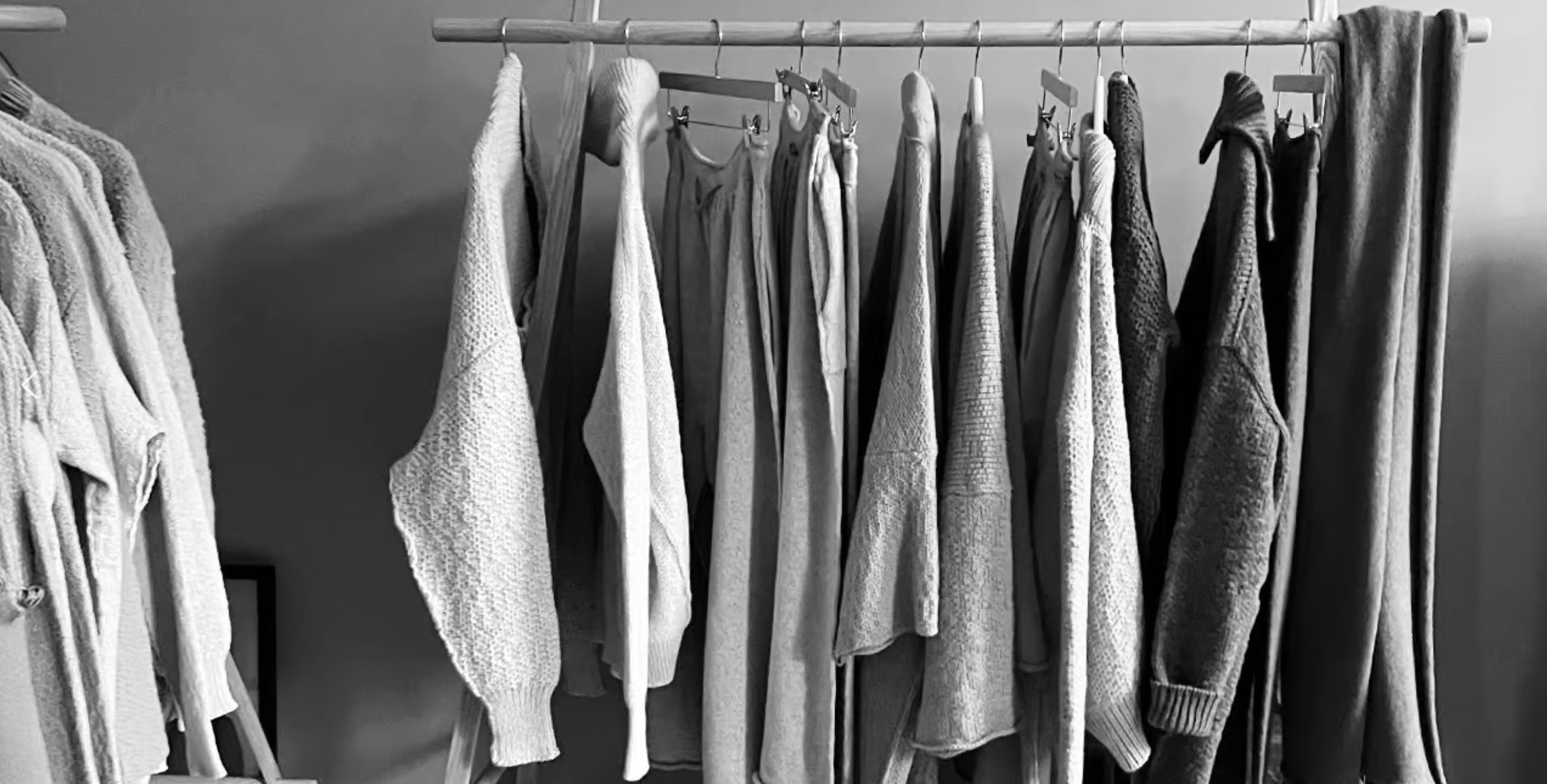
I personally first encountered this brand at a very niche boutique in New Mexico. The sandstone-like knit texture is indeed uncommon, with a color palette dominated by deep tones, suitable for enthusiasts of the artistic, relaxed, and minimalist mountain-style natural fabric aesthetic of brands like Uma Wang and Lauren Manoogian. Those devoted to tea ceremonies, meditation, and yoga also align with this style. Additionally, women with larger frames and tall, slender builds can better carry off the sophisticated ease of this relaxed aesthetic. As someone who is 158cm tall with a large head and evenly proportioned short stature, I have little connection with this type of clothing, at most purchasing accessory pieces.
Since the brand itself is quite niche and doesn’t actively promote itself, let me briefly outline some brand information below.

01
Daniel Andresen was also born in Germany, but grew up in Antwerp from an early age, completing his studies at the Antwerp Royal Academy of Fine Arts. He worked at the Antwerp knitwear brand Haider Ackermann’s studio, led by Hilde Frunt, further refining his handcraft knitting techniques, and launched his eponymous handcraft knitwear brand in 2010.
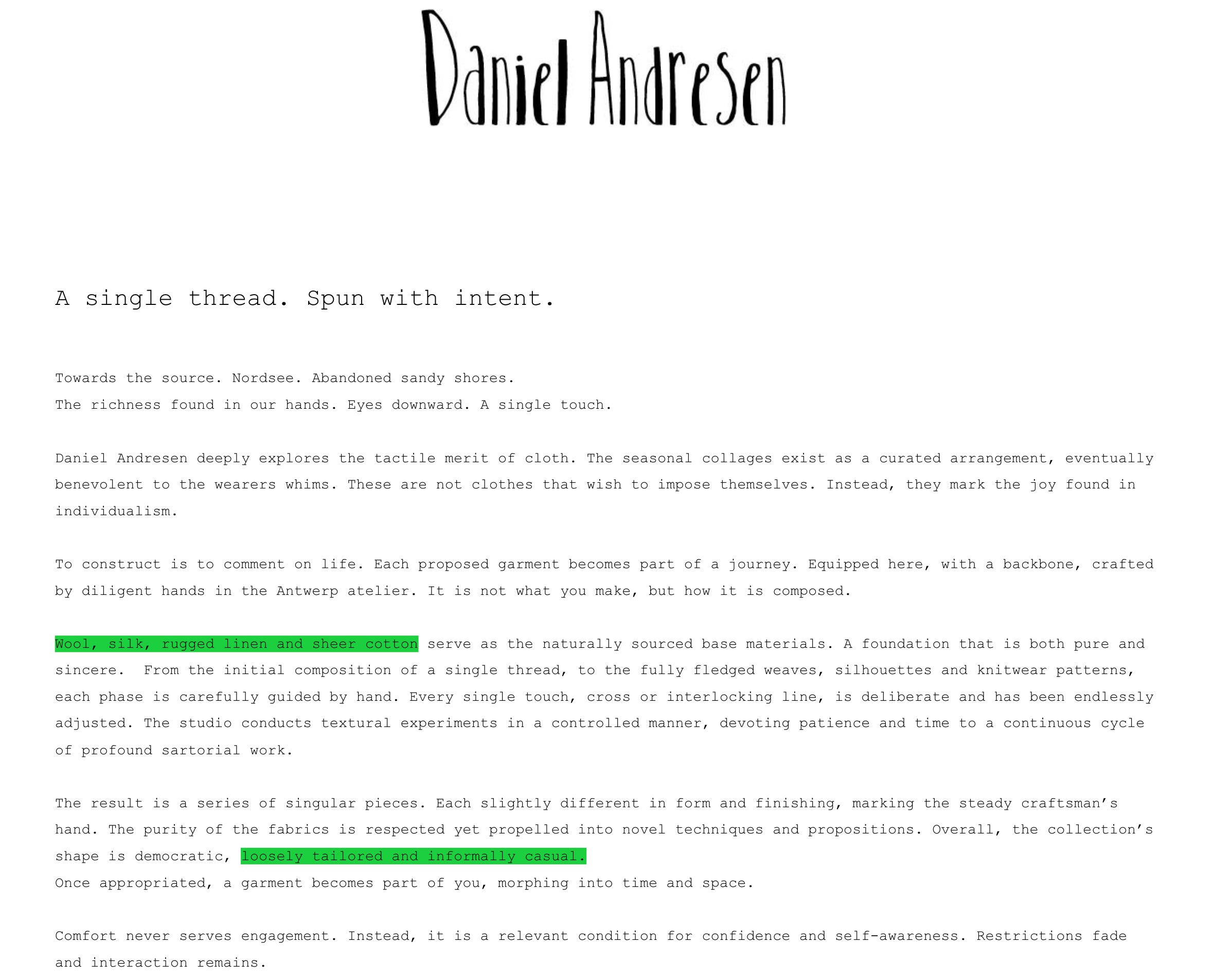
Small farmers from all over the world, very natural yarn, weaving freely, recalls the ripples in sandstone.
From Daniel Andresen’s own description, we can see that the fabrics use wool, silk, rugged linen, and sheet cotton. Here, “wool” includes not only sheep’s wool but also cashmere, yak wool, and camel hair. Yak wool and camel hair are sometimes blended with mulberry silk or sheep’s wool to enhance the fabric’s skin-friendliness, while pure yak wool and pure camel hair are more commonly used for winter mid-length cardigan styles.
The brand’s silhouette follows a loose, relaxed aesthetic (loosely tailored and informally casual).
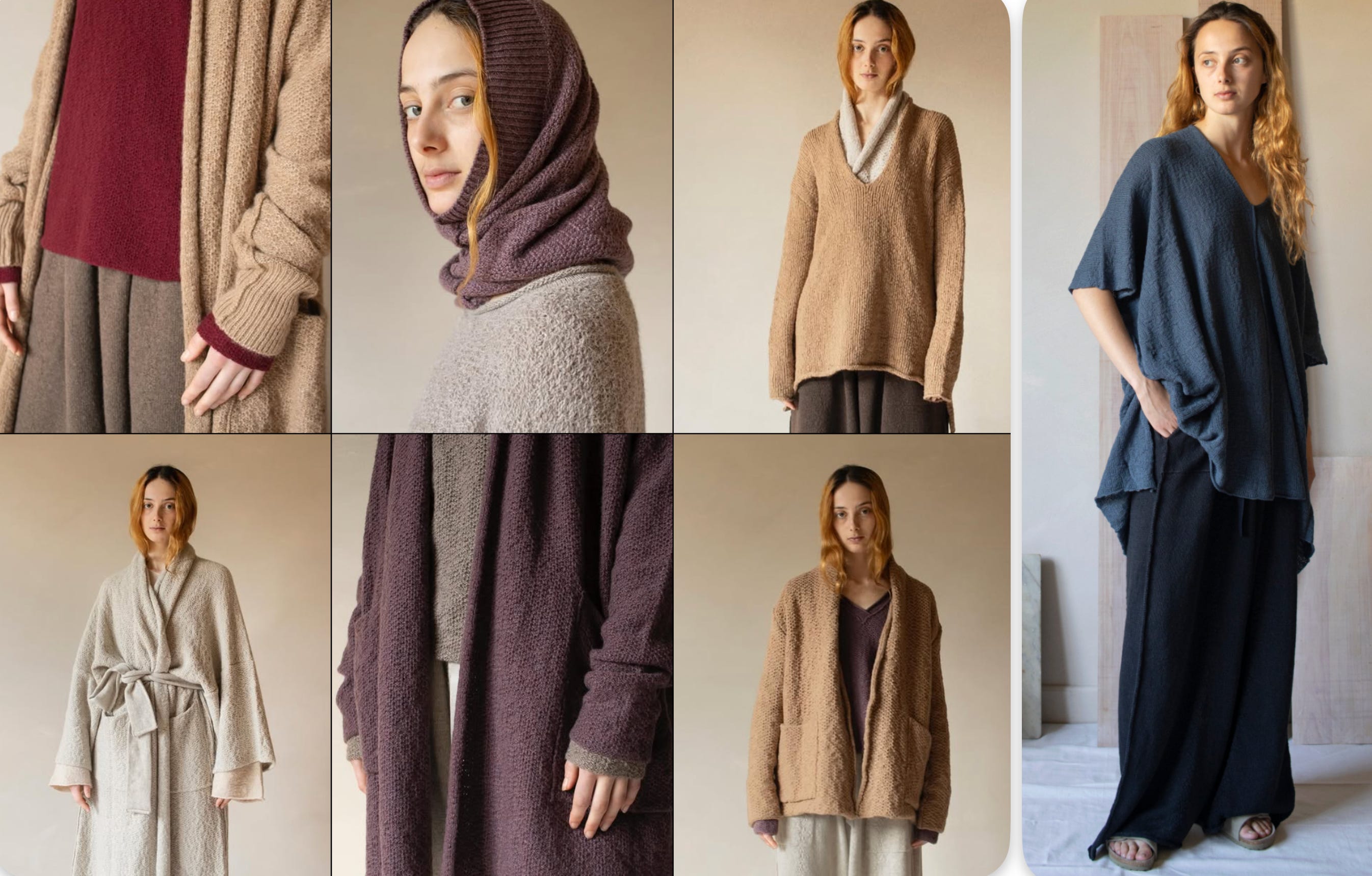
Daniel Andresen’s autumn/winter bestsellers are mid-length cardigans and medium-thickness pullovers made from various animal fibers, while spring/summer focuses on loose short-sleeve tops and trousers in linen and mulberry silk.
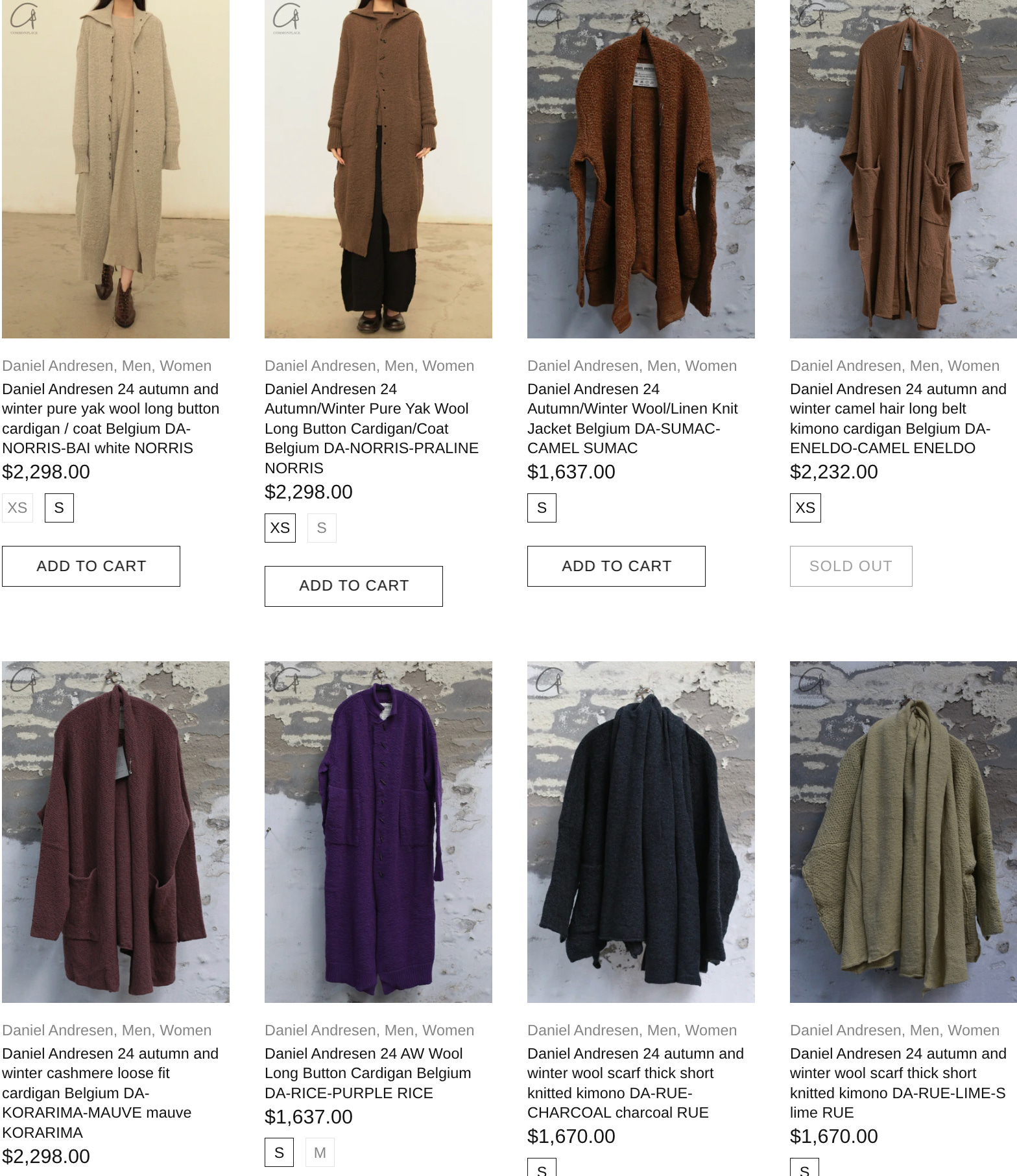
Perhaps due to the artistic texture of the handcraft knitting, Daniel Andresen’s pricing is higher than the other niche Italian and British cashmere knitwear brands I’ve previously introduced, placing it in the mid-to-high-end price range.
02
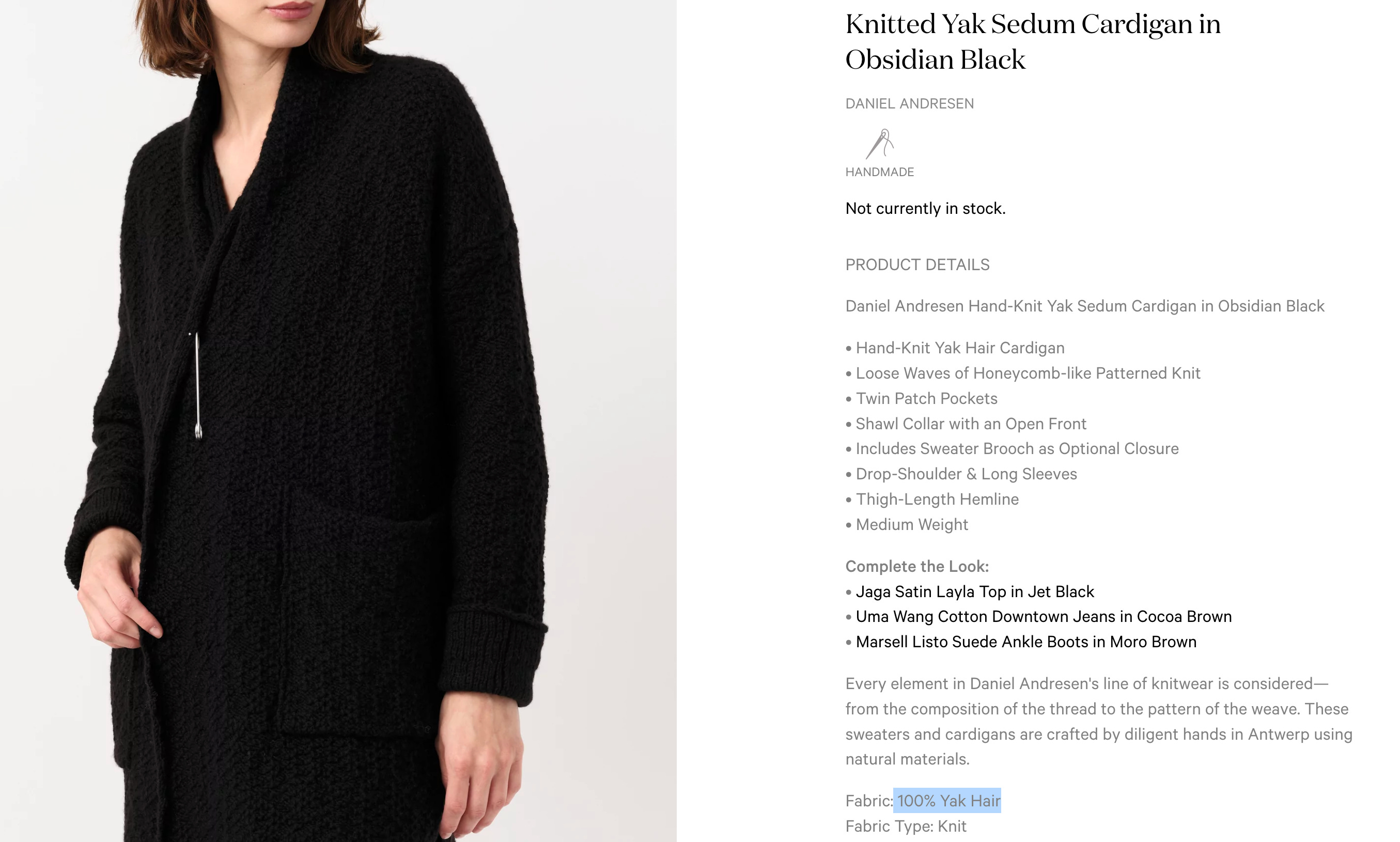
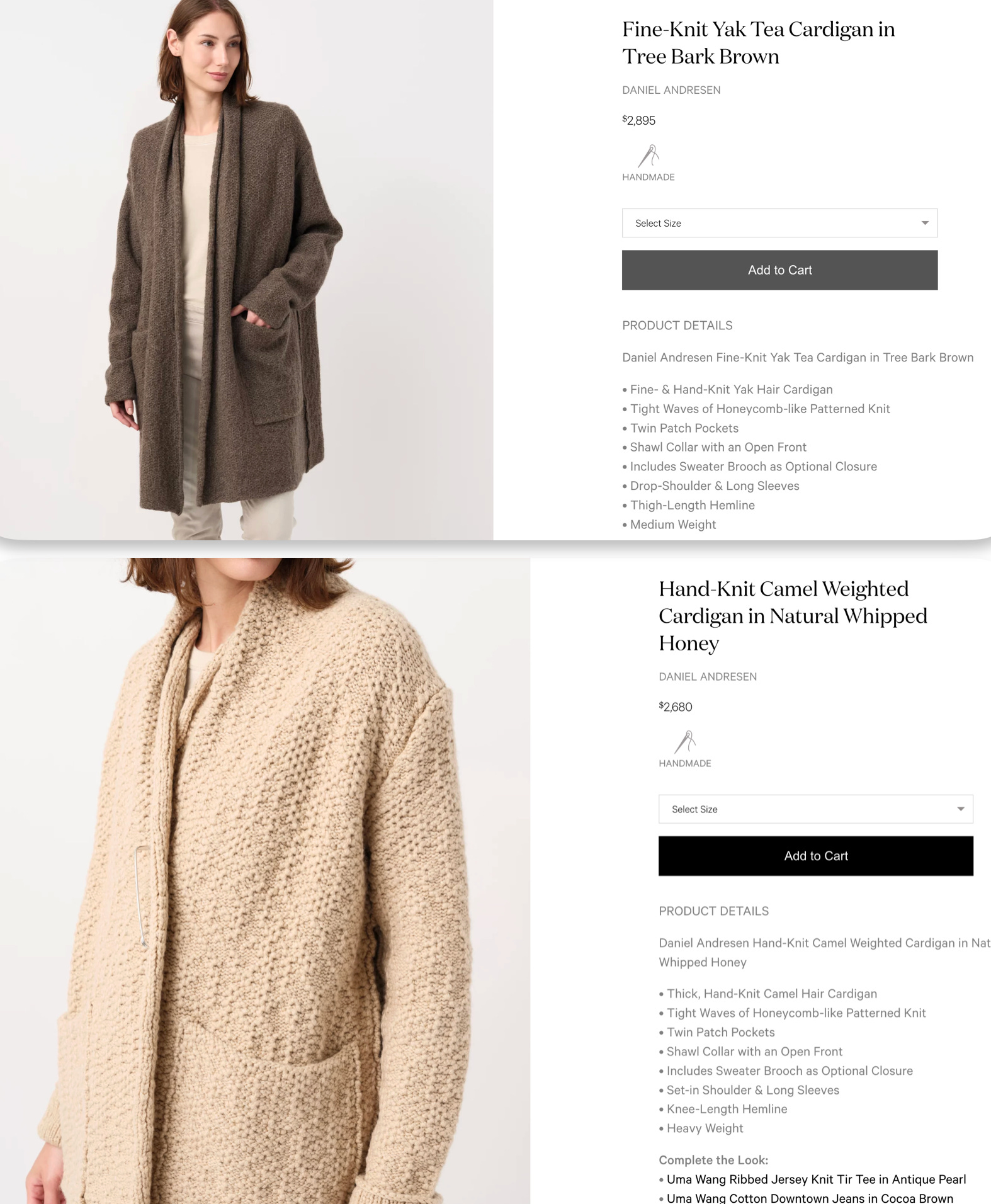
This is the first time I’ve seen a cardigan made from 100% yak wool in a European brand. Daniel Andresen’s cardigans and coats rarely feature buttons or zippers, typically worn open. In this image, the model has secured it with a safety pin.
The 100% yak wool styles shown below are $200 to $300 more expensive than 100% camel hair styles.
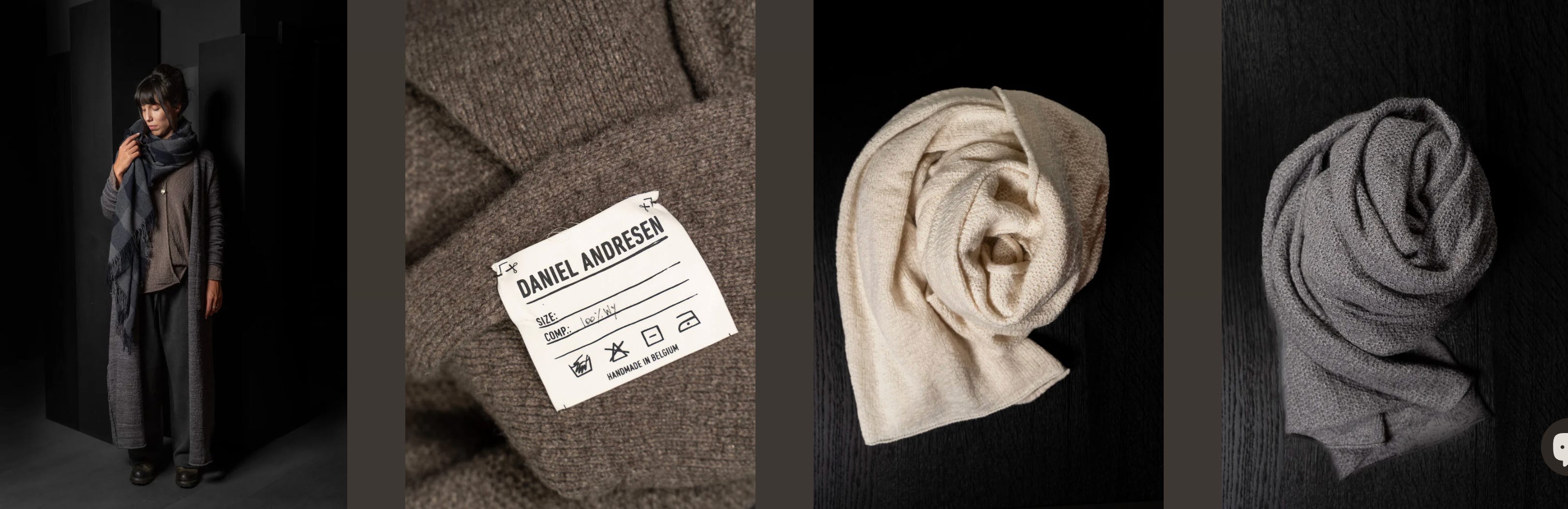
Accessories such as scarves are also predominantly made from yak wool. Although Daniel Andresen offers three major types of wool fibers for winter, most products use yak wool, with cashmere more commonly seen in short styles, while camel hair is mainly used for long cardigans.
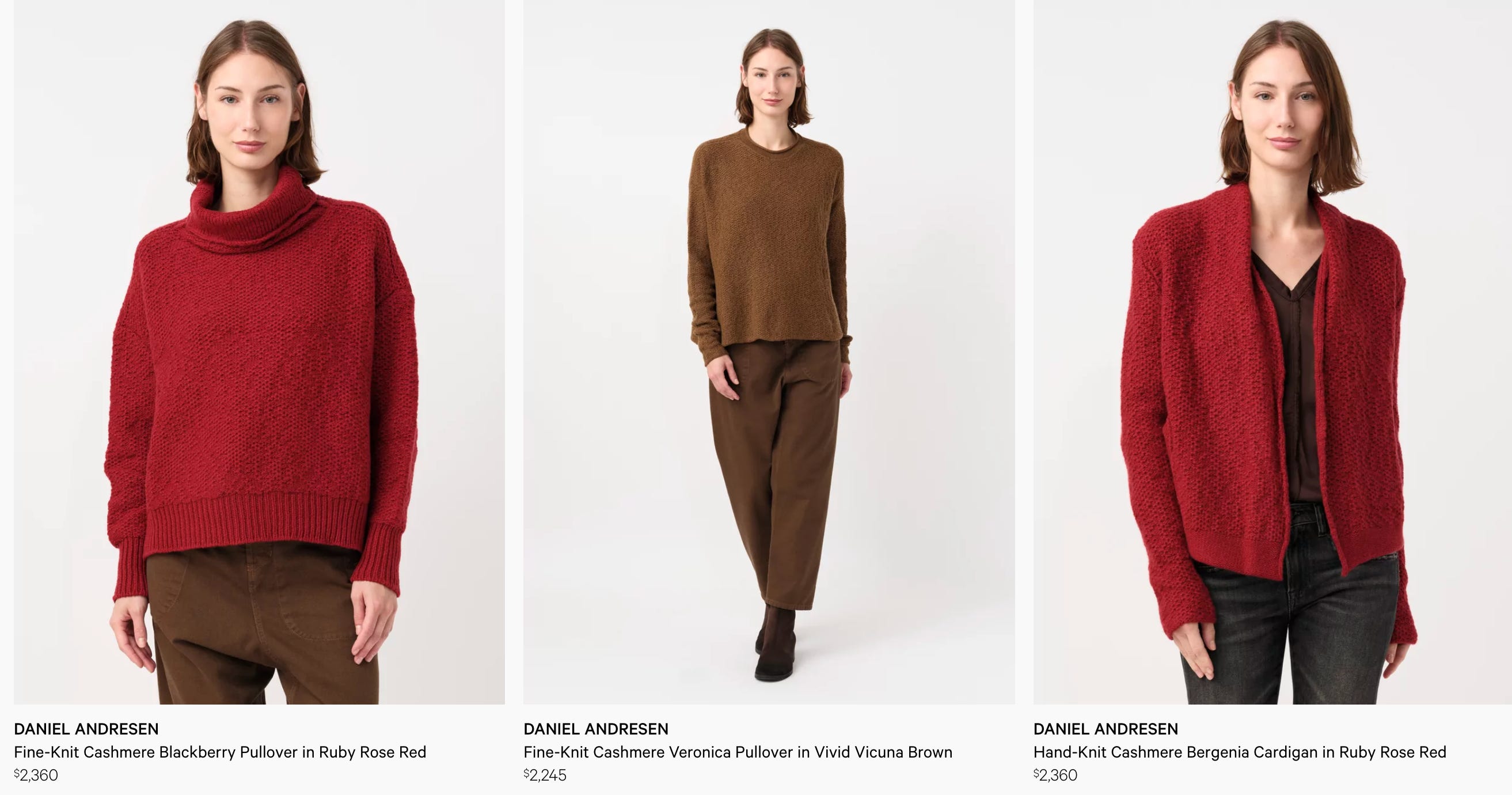
Daniel Andresen’s cashmere fabrics are more often used for pullovers, while yak wool and camel hair are more commonly used for the brand’s long knit cardigans.
Thick cashmere sweaters are priced at $2,800, while thinner ones are $2,200. Daniel Andresen’s cashmere fabrics are more commonly applied to these short styles shown below, with only a very small number of long cardigans made from pure cashmere.
Epilogue
After writing this article, I understand why most of Daniel Andresen’s long cardigans and knitwear are predominantly in deeper tones such as tea brown, brown, and gray—it’s because yak wool itself is naturally darker in color and not as easy to dye as cashmere.
All of the items shown below are 100% yak wool.
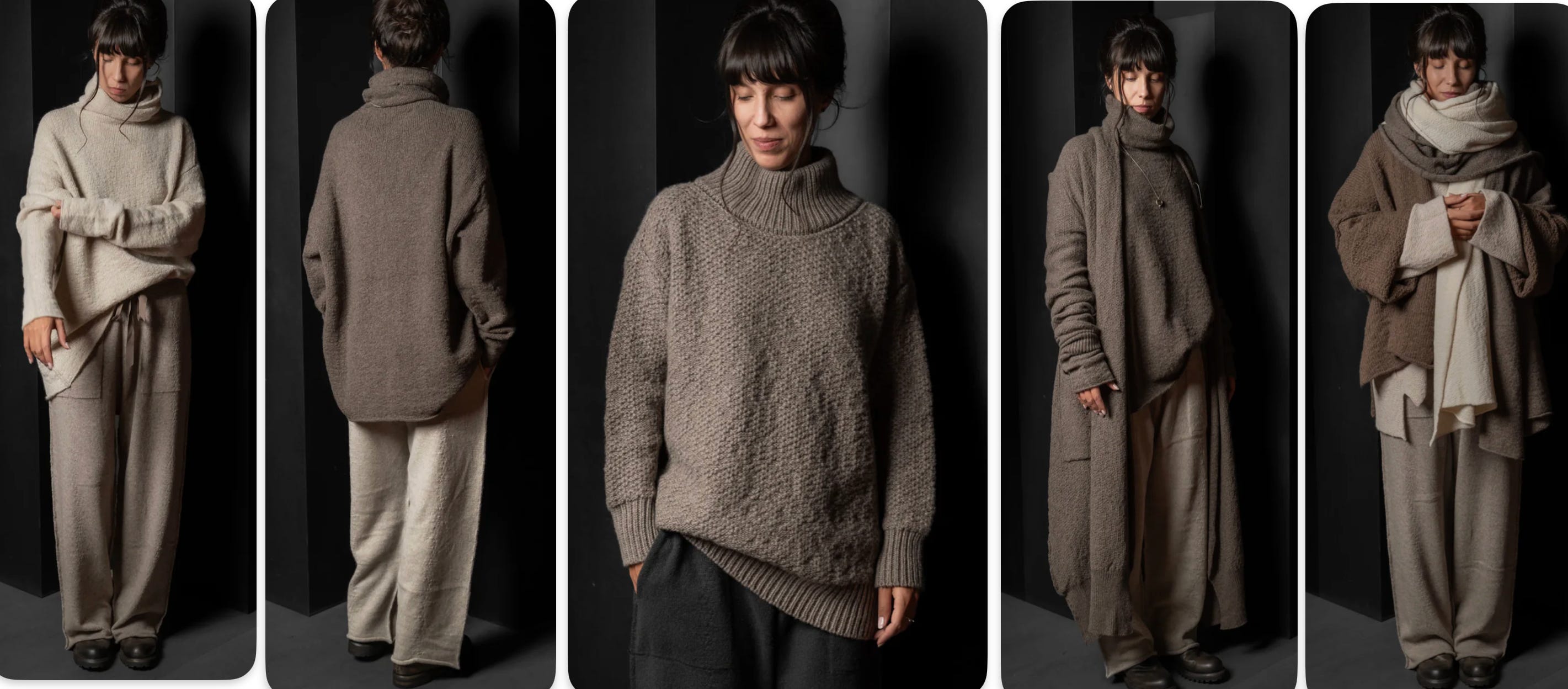
This is the first time I’ve encountered a brand so focused on yak wool, and I’d love to touch and feel its density, softness, and warmth firsthand. However, having previously felt Chinese domestic yak wool knitwear, my sensitive skin still cannot accept it—it’s noticeably more prickly compared to cashmere. Of course, the actual experience depends on the brand; some brands specifically soften the fibers and blend them with non-irritating fabrics like cashmere and sheep’s wool to improve fiber fineness. Given Daniel Andresen’s higher price point, the texture should likely not be too rough.

pamperherself